

Archive for Coaching – Page 18

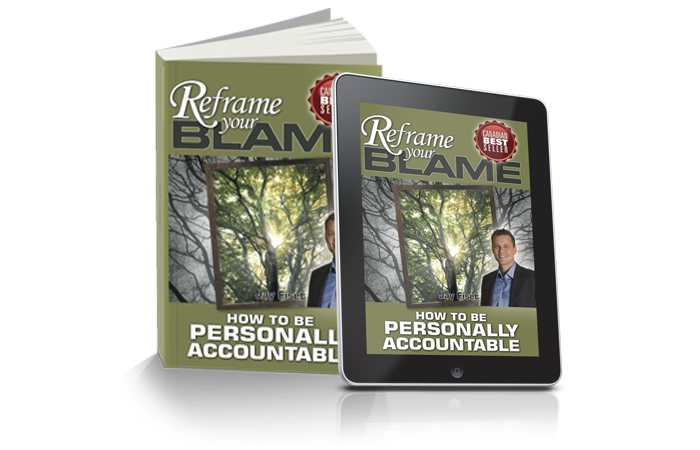
Book Excerpt “How Did You Learn To Blame?”

What You Resist Persists

One of the immutable laws of the universe is that you get more of whatever you focus on or give energy to. If you think hard about how you don’t want to be victimized, you can actually attract victim experiences into your life!

Your brain or belief system doesn’t hear or register the negative words like “don’t”. Try telling yourself, Don’t think of a red car.” An image of a red car will flash in your mind. So, by saying, “I don’t want any more victim experiences,” you are actually giving victim experiences energy and you will attract more of them into your life.

Notice what you are resisting. This is the foundation of becoming more conscious in your life. (NOTE: If you have not read Law of Attraction by Michael Losier, I highly recommend it as one of the clearest and simplest explanations of how what you resist persists works.)


Societies Are Based on Victimization
Society teaches us to be victimized. We have been taught that deciding who is responsible is essential, and that, whatever goes wrong, there is someone some-where to blame and even to sue. Our whole legal system is founded on this concept.
I challenge you to watch or listen to one complete newscast and not hear directly or indirectly that some-one or something is to blame for the woes described. There is a talk radio host in Calgary who regularly asks his woe-of-the-day guest, “Who is to blame for your problem?” or, even better, “Who can we blame?” In-variably, the Victim has a long list. To be fair, this same host also asks what can be done to fix the problem. However, usually much more time and energy is spent on directing blame than on resolving the issues.


Our society has become skilled in establishing blame (victimization), often from the moment of conception:

  • She didn’t take her pills.
  • The condom broke.
  • I couldn’t interrupt the mood.
  • She trapped me.

And, all too often, it continues from there. In fact, one could argue that blame and victimization have sur-rounded us virtually from the beginning of history.


Genesis 3:11
And they heard the voice of the Lord God walking in the garden in the cool of the day; and Adam and his wife hid themselves from the presence of the Lord God amongst the trees of the garden. And the Lord God called unto Adam, and said unto him, “Where art thou?” And he said, “I heard Thy voice in the garden, and I was afraid, because I was naked; and I hid myself.” And He said, “Who told thee that thou wast naked? Hast thou eaten of the tree, whereof I commanded thee that thou should not eat?


This direct questioning by the Lord appears to have made our first parents very uneasy. Adam could have offered any number of reasons or excuses why he took the fruit. He could have said, Gee, the sun was in my eyes, so I couldn’t see what I was eating Or possibly a modern-day Adam would offer this justification: Sure I took a bite, but I didn’t swallow.


What would I expect Adam to say to this man who walked and talked with God, someone who held the honored position of being the first human on earth? I wish he had said, “I was wrong. I’m sorry. I will never do it again.”


Instead, listen to Adam’s immediate response, “The woman thou gavest to be with me, she gave me of the tree. Adam is rationalizing his sinful behavior, trying to shift the responsibility to his wife, Eve. At this point, Eve has an opportunity to be a better human than Adam. However, her response to the same questioning is, The serpent beguiled me, and I did eat. Pretty lame. The ten-dency of mortals to deny Personal Accountability seems to be evident from the very beginning.


Here is an interesting example of modern-day learning to blame. Close friends of ours have three kids. The middle child, Luke, is full of piss and vinegar like most boys. Luke loves skateboarding and gets a skate-board at the ripe old age of three. His Mom, however, is not quite as keen about the skateboard, because she is concerned that Luke will hurt himself. So she sits him down and talks to him about the dangers of skateboarding, reviews all of the safety equipment, and makes him promise to be careful. All is good up to this point. Then the inevitable happens. Luke has a dirty wipeout and scrapes up his face. He doesn’t cry and doesn’t run to tell his Mom because he knows that she will be even less willing to let him continue skateboarding. But Mom has witnessed the wipeout. Later that day, Mom asks Luke what happened to his face. His answer floors her.


To cover up his skateboarding drama, Luke decides that it is better to say that his older sister hit him! He has grown up in an honest and accountable house-hold, yet, at age three, he has already figured out that blaming someone else for his mishaps can provide him with a payoff and a protection. In this case, it did not work, but it does often enough in general, and he was sure willing to try.


Activity Learning to Blame
How did you learn to blame? What is your earliest recollection of blaming someone else? Were there any specific people or events that set up your patterns of blame? To learn more about Personal Accountability visit: http://www.personalbestseminars.com
Clear, Complete and Create

Well another year is winding up and as usual I am in the midst of reviewing my year and strategizing about 2011.

For the last couple of years I have been starting a new “tradition” in addition to my annual assessment (a very cool process that I will be doing for the first Inner Circle Mastery Evening of the year). My new tradition is designed to wrap up the end of the year to the best of my abilities and create HUGE momentum into the first quarter of the next year.

Simple put it is called:

Clear, Complete and CREATE!!

These three easy steps are deceptively powerful and when woven together with a meaningful strategy can be a complete game changer. A true TSN turning point!

So I am going to provide the basic overview of the program here.

The overall grounding and purpose.

All of us have a variety of projects, conversations, business deals that are incomplete, have loose ends or that are otherwise waiting for an action or a decision to let it go.

Each of these consumes our energy, creates static and misdirected our time and resources all the while diminishing our capacity to create the lives we deserve and desire. In the language of “Getting Thing Done” each of these are “Open Loops” and each open loop keeps us from creating our ideal lives.

By consciously clearing and completing we can manifest a powerful space to CREATE!

Step one, CLEAR!
The first thing that we must do is get all of the information out of our heads and hearts. The truth is that most of us do not really know how much STUFF is actually incomplete in out lives and worlds. Only one way to get it out and that is to start writing.

I have developed a cool process for this that assists with the psychology of clearing, but please know that simply a list will do wonders!

Many people report simply this process does wonders to lift the fog, create energy, and direct energy.

Step 2 COMPLETE

There are 2 basic approaches to completion. The first and most obvious is simply get the task DONE! Yes this may require support, a plan and strategy but be clear it is possible to get it done and I will wager that you could get it done in a maximum of 90 days!

The second approach is quite different it is this. If this open loop is not significant to you, if it was not really your goal/task/desire…then simply LET IT GO!

Now letting it go itself often requires a process itself, a formal agreement, a ritual a way of truly letting your belief system release the task or idea.

Again I have developed some simple yet powerful processes to accomplish exactly that. What you need to know that you must complete these outstanding issues or they will consume your capacity to truly create!

Step 3 CREATE!!
This is to me the most fun and rewarding of the 3 processes and is the rewarding culmination of clearing and completion process.

A couple of hints, even though you may be feeling energized and powerful even before your completion processes are finished do your best to NOT start the creation process as it often triggers many new “incomplete’s”. I do not want you to stop or block the creation process just be clear about your agreement with yourself as to what must be finished before you jump into something new.

Obviously there is much more to this than a couple of hundred words, such as significant insight into your belief system, understanding some of your limiting patterns and self sabotage, leveraging your greatest strengths, clarifying your mission and what is really important to YOU, just to name a few.

If you are interested in participating in an exclusive group of brilliant people dedicated to making 2011 the best year of their life thus far. Email me at jfiset@me.com

5 thoughts for small business on delivering efficiency

This is from the blog at Crowdspring and is a GREAT summary of one of my favourite books about business “The Goal” by Ellyahu Goldratt.  Visit http://www.crowdspring.com


In his book “The Goal,” Eliyahu Goldratt tells the story of a Boy Scout troop out for a hike. The goal of the hike is to cover 10 miles in 5 hours, in other words to keep the troop moving at an average speed of 2 miles per hour. As the troop works its way up the trail, gaps begin to appear between the scouts, and the slower hikers find that periodically they must go double-time to shrink the gaps. The scout leader observes how the gaps between the kids are magnified the further down the line he looks, and it becomes clear that the fluctuations in each individual hiker’s pace are impacting those behind. As the hike proceeds, the process gets less efficient, because the hikers must expend more energy to close the gaps, and by the time the group reaches the half way mark, they have fallen behind by almost 2 hours.

One scout, Herbie, is the slowest of the hikers and so his speed governs that of the entire group. Putting Herbie at the end of the line does nothing to speed the group’s overall progress, but instead further limits the group’s speed by effectively reducing the pace for everyone. It is only after the scout leader comes to a key realization, that he finds the way to improve the overall speed of the troop. The insight? If the efficiency of an entire process is governed by it’s most inefficient operation (Herbie), then, to reduce the fluctuations (along with the extra “energy” expended), change the order of operations by putting that one before the others. Next, improve that least efficient operation (Herbie) to increase the overall speed of the entire process.

So what does the scout leader do with this new realization? First he moves Herbie to the front of the pack. This has the effect of removing much of the variation in each hiker’s speed (eliminating the gaps between the hikers) and with the fluctuation reduced, the hikers don’t have to struggle so much to “catch up” when they fall behind, nor must they expend as much energy as they perform their individual roles. Next, the troop leader decides that he needs to find a way to help Herbie speed up, and by doing that, speed up the entire hike. How? He asks Herbie for his backpack, empties it and divides all of the heavy equipment between the other (faster and stronger) hikers. By lightening his load the scout leader has given Herbie the ability to walk faster. The result? Herbie is still the slowest hiker, but he is faster than he was before and so then is the rest of the troop. Bingo!

Goldratt’s metaphor is applicable to small business of all kinds, whether a restaurant trying to serve more customers faster; a factory trying to improve productivity and reduce inventory; or a web design/development firm trying to improve overall efficiency and increase capacity. Here are some specific thoughts:

1. Find the bottleneck. I wrote about this a few months ago and suggested some simple ways a business could identify bottlenecks in their own process. In the case of a factory, this could be represented by the work station where inventory tends to back up and analyzing its capacity. In any case, identifying this problem is the first step in improving the process overall.

2. Determine throughput. This is the speed at which a process performs, and is effectively governed by the bottleneck or the slowest operation (as illustrated so nicely by Herbie). There are a number of simple formulas that can help to determine this; in the case of a restaurant could it be one of the kitchen positions, that keeps the others waiting? Perhaps the fry cook doesn’t have a large enough surface to work on and can not push the orders through fast enough to keep up.

3. Explore changing the order of operations. Where does the bottleneck occur in the process? Can changing this improve the overall speed or efficiency? What if the fry cook did her work before the others and limited the wait time each of the kitchen stations experienced? Answering this question can go a long way towards improving overall efficiency.

4. Lighten “Herbie’s” load. Can the bottleneck be relieved through simplification or (in the case of an individual) by reducing responsibilities? If the speed of this operation can be improved, the overall speed of the entire process can, too. In the case of the web development firm this could be represented by a tricky part of the process or by an individual employee with too large a workload. Look at different ways to divide the work among the team, or even consider increasing or adjusting capacity with new hires.

5. Bring the entire team into the process. The scout troop agreed to have Herbie take the lead, understanding that they would all benefit from the change. It is critical to have buy-in when making changes to a process and much can be learned by everyone involved.

Thou Shall Not Work…For Someone Else

I have been toying around with a book that I think is fun and squarely takes aim at the old industrial revolution beliefs of go to school, get a job, save for retirement and all will be well.

Thou Shall Not Work…For Someone Else, The 10 Commandments of Entrepreneurship.  I am going to start blogging my thoughts and notes for the book.  Please feel free to comment, share your point of view and let me know how you make out “Living the commandments”  ; )

The first draft of the 10 Commandments of Entrepreneurship


1) Thou shall create value

2) Thou shall be sustainable in all endeavours

3) Thou shall build to scale

4) Thou shall become addicted to education

5) Thou shall release your limiting beliefs

6) Thou shall give, you will become a new breed of Philanthropreneur

7) Thou shall not create false economies

8) Thou shall create more than you consume

9) Thou shall focus exclusively on that which only YOU can do

10) What do you think it should be???

I have about 5 others that are on my list but I would love to hear what the rest of you think.  What do you think should be one of the Commandments of Entrepreneurship?

Social Media and Your Business

Wyatt’s 4 year old pictures, I cannot get over how fast he is growing.

The other day he comes into my office hand on his hip and says “Daddy, do I have to have a nap today?” I say yes, Wyatt, “Well I think it should be my personal choice, and I choose no nap!”

I am SO happy we started teaching him about choice so young!  ; )


Last weekend in the Entrepreneurs Bootcamp I was making a point about using Facebook and a few of the attendees literally rolled their eyes.

Another participant says “I know what you mean, but you must think of it as a business tool”

I must say my internal response was nothing short of “Duh!”  Upon reflection however I can see how my grounding and view of Facebook and others view can be quite different!

  1. I choose to get on Facebook for the purpose of communicating with my tribe, developing and reinforcing business relationships.

  2. I clearly choose to ignore the games, the mafia, the farms and the other time wasters (yes I own my judgment).

  3. My life and business are very clearly highly integrated, I know that is not the case for most people who have a job.

The point of this post is simply this, if you have a business you really should be on Facebook (and other social media for that matter).  It is NOT the way of the future it is the way it is NOW!

SIDEBAR:  Here is the wild and entertaining reality, this just happened literally as I was writing this blog.  I get this email via Facebook.

XXXXXXXX March 19, 2010 at 7:01pm
Subject: bootcamp

Hi Jay,
How much for the bootcamp?
xo
lisa

Now what is funny about this is that she could have contacted me in a multitude of ways but she choose to do it via Facebook….interesting. If you are one of the holdouts, please take my word for it.  Get after it…NOW!!

Steps:

Get a Facebook Account

Get a fan page for you and your business

Start communicating and contributing value it will transform your business!

If you have not already checked out my newest fan page for The GrowOp…if you don’t know what it is you gotta check it out.

http://www.facebook.com/pages/The-GrowOp/391264820289?ref=ts